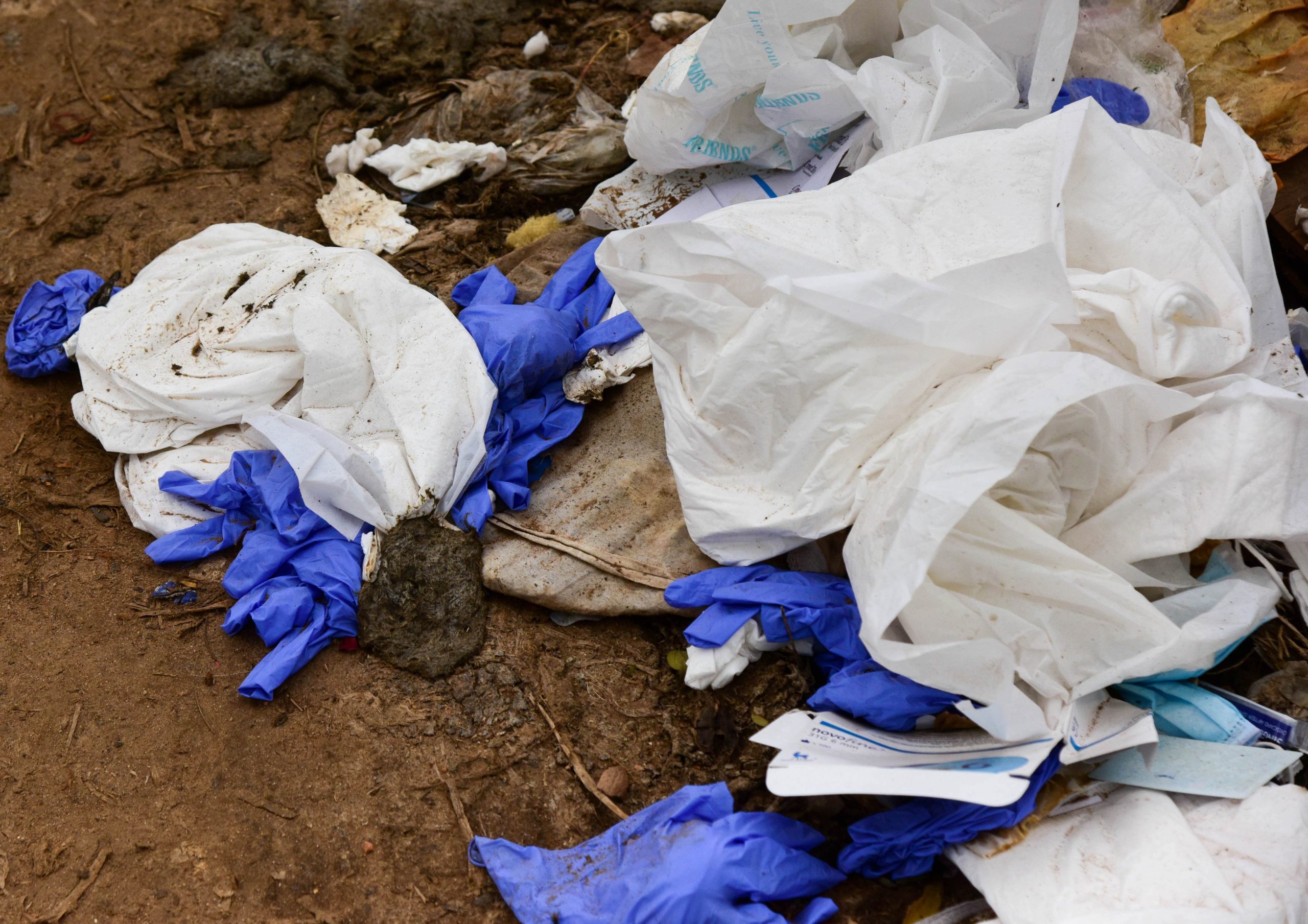

One of the benefits of COVID-19 observed was of comparatively cleaner air due to factories closure during the lockdown. However now, as we are back to work and preparing ourselves to live with the virus, wearing face masks and gloves has became a new normal for us. But this is causing another threat to the environment as new category of plastic waste has emerged which includes masks, gloves, disposable wipes, PPE kits and everything that pollutes environment.
Irony is that when we produce plastic to fight with one crisis we may be slowly contributing to another. Notwithstanding the pollution levels decreasing, Earth healing but an inevitable threat is waiting outside our homes in form of massive clinical waste generated in our fight against COVID-19.
Today we are using billions of single-use masks and are dumping them and other medical wastes carelessly. But these single-use masks, gloves and PPE kits are dangerous because they are made up of such fabrics and plastics which are non biodegradable and which eventually may end up in water bodies clearly posing a threat to the marine life.
Surgical masks are made up of polypropylene, a petroleum derivative which takes up to 450 years to decompose. They do not decompose easily but slowly break down into micro plastics of diameter 5mm and can enter the food chain through marine animals and can lead to devastating inpacts. Risks of micro plastics for human health are still under study.
These plastic wastes in the form of masks and gloves may appear like jellyfish and other type of food for the marine animals which may end up blocking their digestive system and can cause death.
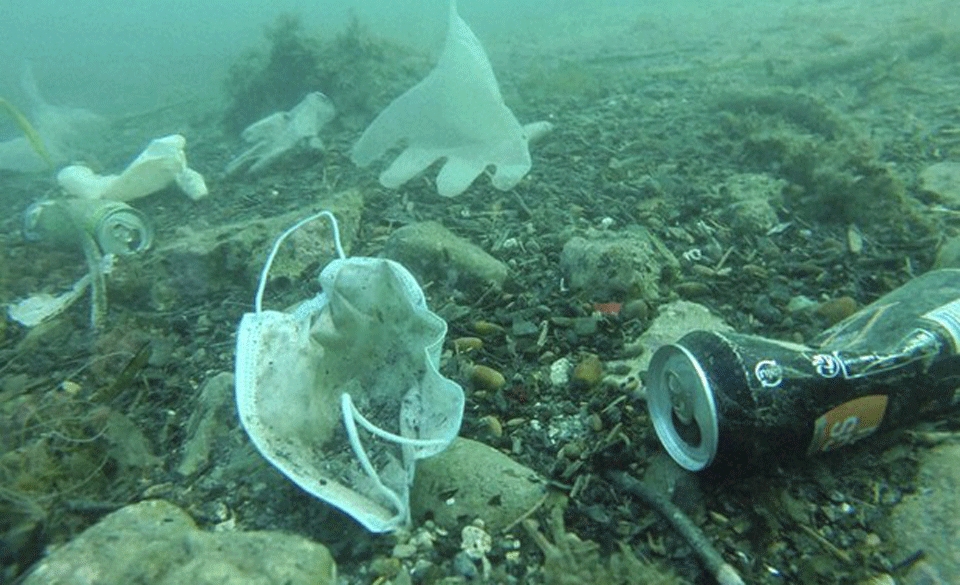
Suppose if every one in India starts using a single use face mask (having approx. weight 5g) everyday for a month, it would create 6763 tonnes of contaminated plastic waste. Now if one percent of the waste is thrown in the river then it will be in total 67.63 tons of contaminated plastic weight. These micro plastics might return to us through sea foods which can be hazardous to us, as a number of chemicals are added to these masks during their manufacturing.
Measures that can be taken to stop this massive clinical waste from polluting our environment-
Mainly three types of masks are being used by the public during this time:
- Surgical masks
- N95 respirator masks
- Masks made of cloth
People mainly use surgical masks because they are cheap, readily available and also believed to provide good protection from coronavirus. But we must use washable and reusable masks i.e. N95 type or cloth type if possible. Although the cloth type masks are not ideally recommended for one who are taking care of infected person. But they can be used for routine works by the person who are in the virus affected zones.
Proper Disposal of Masks - As per an advisory issued by the Directorate General of Health Services of Ministry of Health earlier this month, used masks, especially those used by “patients/care givers/close contacts” under home-care, are to be considered “potentially infected” and should be disinfected with ordinary bleach solution (five per cent) or sodium hypochlorite solution (1 per cent) and then disposed off either by burning or deep burial.
- CPCB issued guidelines on March 18 about handling and disposal of waste generated while treating or quarantining COVID-19 patients. And these guidelines make specific mention of biomedical waste generated by ‘home-care’ patients.
- In case of home-care from suspected patients, biomedical waste should be collected separately in yellow bags and handed over to authorised waste collectors engaged by local bodies. ULBS (Urban Local Bodies) should engage CBWTFs to pick-up such waste either directly from quarantined houses or identified collection points.
Government should impose fine on people dumping masks in open areas and attention should be paid on proper disposal of non-biodegradable medical wastes. At last always remember-
“Staying Safe should not happen at the cost of harming the Earth, because it knows to retaliate well.”